Why a Hinge Changes the Way a Door Works
Why a hinge changes the way a door works: learn how its position sets the swing, reveals clearance problems, and helps you plan a more useful room layout.
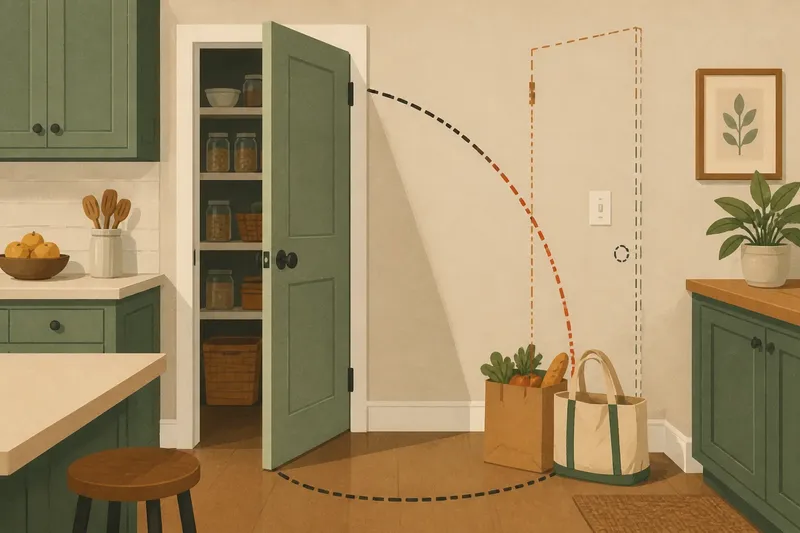
A hinge changes the way a door works by setting the path its moving edge takes through a room. On a cupboard, room door, or garden gate, the hinge line acts as a pivot: move it to the other side, and the same panel sweeps through a different space.
Think of the handle edge tracing an arc while the edge beside the hinges stays close to its pivot. That arc can meet a wall, cover a switch, block a drawer, or cross a busy route. The hinge is a small fitting with a large say in how a doorway feels to use.
What does a hinge actually do?
A hinge joins two parts while allowing controlled rotation. One leaf attaches to the door and the other to its frame; a pin or knuckle arrangement keeps the leaves aligned as the door moves. The line through that pin is the axis around which the panel turns.
A door therefore occupies a changing slice of space, not just the doorway it covers when closed. Its handle edge travels through the broadest arc, so the available room near that edge often determines whether the swing feels clear or cramped.
When a door seems to stop short, note where the panel or handle meets something. The contact point can reveal which part of the arc is constrained.
How does hinge position shape a door’s swing?
Imagine a pantry door hinged on the left as viewed from the kitchen. Its right edge arcs toward the person opening it. Put the hinges on the other side, and the panel crosses a different part of the kitchen; the handle approaches a different wall, cabinet, or route.
The hinge’s position relative to the door face also affects how the panel sits when closed and whether it clears the frame as it opens. A recessed butt hinge can let a door sit nearly flush with its frame. A surface-mounted hinge remains visible and may hold the panel farther out. On a cabinet, that offset can determine whether a door passes a neighboring front without striking it.
Opening direction is a spatial choice. A room door may work better when it rests against a wall instead of covering a switch or narrowing a passage. A cabinet door may need to swing away from a drawer. The hinge makes the route possible; the surrounding layout decides whether it is useful.
What should you check before choosing a swing?
Open the door through its ordinary range and inspect the path, the open resting position, and the nearby moving parts. These observations help you decide whether the current swing suits the space or whether another arrangement needs professional assessment.
- Handle path: Check whether the handle approaches a wall, cabinet pull, or usual walking route. If it hits or obstructs one, then consider a different swing or move the nearby item; otherwise, keep the current arrangement.
- Open resting position: Check whether the open panel covers a switch, radiator, shelf, or place where someone stands. If it does, then consider a swing that parks the panel elsewhere; if not, the open position is likely workable.
- Neighboring doors and drawers: Open nearby drawers and panels while the door is in use. If their paths overlap, then change the furniture arrangement or ask an installer whether the swing can be changed; if they remain clear, keep the layout.
- Frame-side clearance: Watch the edge beside the hinges as the door starts moving. If it rubs or catches, then stop treating the issue as a simple room-layout problem and have the hinge, frame, and door alignment assessed; if it clears, look elsewhere for any obstruction.
- Approach and access: Notice where people stand to reach the handle and pass through. If the panel forces them into a blocked or awkward route, then consider another swing direction; if the route stays open, the existing direction may suit the room.
- Door construction: Check whether the door, frame, and hinge type appear designed for the current direction. If changing sides would require new recesses, altered hardware, or work on a heavy door, then consult a qualified installer; if the setup already accommodates the proposed direction, ask the installer to confirm the fit.
Say you have a pantry door that opens across the spot where someone sets down grocery bags. In this invented situation, the starting point is a door hinged on the left, a clear wall to its right, and bags routinely placed beside the doorway. First, open the door normally and observe that its handle edge crosses the bag space. Next, hold the door closed and trace the alternative arc by imagining its hinges on the opposite side; the handle would then travel toward the clear wall. Finally, check whether the frame and hinge arrangement can accept that change and whether the new open panel would cover anything. The resulting decision is conditional: if the frame supports a reversed swing and the wall-side position stays clear, ask an installer about changing it; if not, move the bag-drop spot or keep the existing swing.
Which hinge details affect movement?
Hinges differ in how they attach, how visible they are, and how they accommodate a panel. A butt hinge has leaves joined around a knuckle and is commonly recessed into the door and frame. A surface-mounted hinge attaches on top of those surfaces. Concealed cabinet hinges sit inside the cabinet and door when closed; their geometry can help a panel clear the cabinet edge or sit over it.
Cabinet doors may be inset, sitting within the opening, or overlay, covering part of the cabinet front. The hinge must suit that arrangement so the panel can open without striking the frame or its neighbor. A self-closing hinge draws the door toward its closed position, while a soft-close mechanism slows the final movement. Neither changes the basic fact that the hinge line governs the door’s path.
For a replacement, match the hinge to the door, frame, and mounting style rather than choosing by appearance alone.
Why can two similar doors feel different?
Two doors that look alike can feel different because hinge location, panel weight, frame alignment, and available clearance work together. One may pass a nearby surface easily, while the other meets resistance because its edge has less room.
Scraping at the hinge side, a handle that meets a wall, and a panel that stops before reaching its intended position point to different constraints. Contact or resistance does not identify a faulty component by itself. A sagging, heavy, or hard-to-control door should be assessed by a qualified installer, especially if a fitting appears loose or unsafe.
What do people ask about a door’s swing?
Can a hinge change which way a door opens?
Sometimes, if the door and frame can accept hinges on the opposite side and the new arc has room. Specialized hardware or the door’s construction may limit that change, so an installer can confirm what is suitable.
Why does a door need clearance beside the hinge?
The hinge knuckles and door edge must pass the frame as the panel rotates. If they meet, the door may bind; the hinge shape, position, and alignment all affect that clearance.
Does a concealed hinge make a cabinet door swing differently?
It can, because its geometry may place the pivot so the door clears the cabinet side or neighboring fronts. The exact movement depends on the hinge design and how the door is mounted.
Why does the handle edge travel farther than the hinge edge?
The handle edge sits farther from the pivot line, so it traces a broader arc as the door turns. The edge beside the hinges stays close to the axis.
How can hinge position help you arrange a room?
Before placing furniture beside a doorway, open the panel and follow its full arc rather than judging only from the closed position. Look for low drawers, protruding handles, switches, and places where people pause. A door that remains open can occupy useful space even when no one is passing through.
If you are planning a new cupboard or interior door, start with the route people use and the place the open panel should rest. Then check where the handle will travel and whether nearby doors or drawers can still move. The main search question, why a hinge changes the way a door works, comes down to that relationship between pivot and available space.
For an awkward door, describe what happens at the point where its path is blocked before assuming the hinge is defective. That detail helps separate a cramped swing from a possible alignment or hardware problem and gives an installer a clearer place to start.