Open Shelves or Cupboard Doors? A Choice About What Stays in View
Open shelves or cupboard doors? Learn how visibility, access, and visual clutter can help you choose the right storage for the belongings you use.
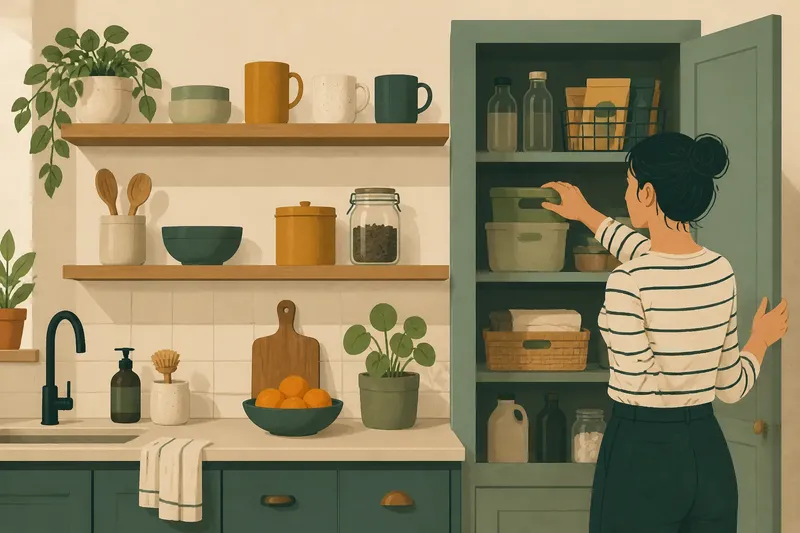
Open shelves or cupboard doors: the better choice depends on which belongings you want to see, reach, and maintain in a particular room. A row of favorite mugs can make a kitchen feel ready for breakfast; the assortment of packets beside them may be easier to live with behind a door. Storage is not just a question of capacity. It decides which parts of household life remain on display.
Think of a shelf as a stage and a cupboard as a pause. Both hold objects, but they ask for different habits from the person using them. The useful question is not whether one style looks tidier in every home. It is what you want your eyes and hands to encounter during an ordinary day.
What changes when storage stays visible?
An open shelf removes a barrier between you and its contents. You can spot the cereal bowl, reach for a glass, or see that the olive oil has moved to the back. That visibility helps when belongings are used often and their shapes are easy to recognize.
But visibility also makes every object part of the room’s visual field. A neat line of matching bowls may read as one calm shape; a stack of mail, loose cords, and half-empty containers reads as several competing tasks. Open storage does not create those objects, but it makes them harder to ignore.
Dust and cooking residue are part of the same bargain. Shelves near a stove or an open window may need more frequent wiping than enclosed storage. Objects that are used regularly tend to be handled and cleaned as part of their routine; rarely touched display pieces can quietly gather dust.
Use an open shelf where seeing and reaching the contents is more useful than hiding them.
When do cupboard doors make daily life easier?
A cupboard front gives the eye a broad, uninterrupted surface while keeping small variations out of view. It can contain mismatched food packages, spare toiletries, or the jumble of tools that makes a room function. A closed door also gives stored belongings a buffer from dust and splashes, though the interior still needs ordinary care.
That visual calm comes with a small memory task: you must remember what is behind the door, then open it to retrieve the item. Deep shelves can make this harder if objects drift toward the back or get hidden behind taller containers. Grouping related things and keeping frequently used items near the front can make a cupboard feel accessible rather than opaque.
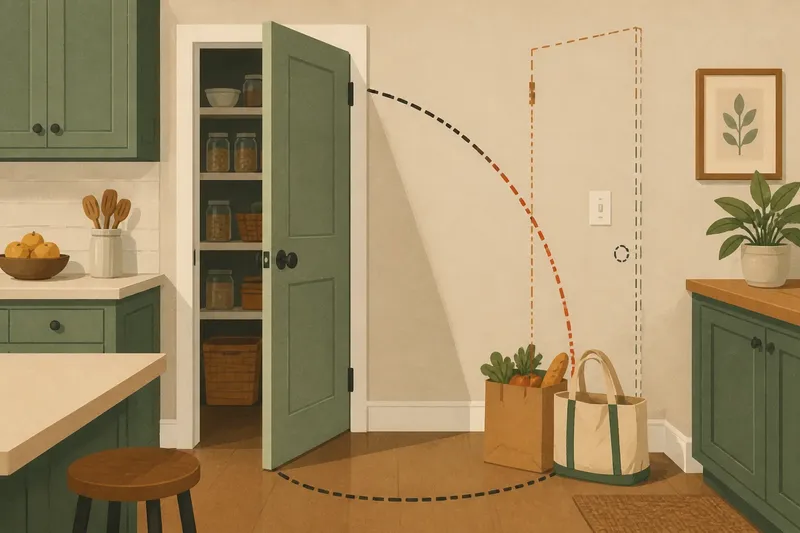
Doors also need room to open, and their handles or edges become part of the room’s circulation. In a narrow passage, a door that swings into a walking route may be less convenient than an open shelf or a different storage location. Consider the movement around the storage, not only its appearance when shut.
How should you compare open shelves or cupboard doors?
Start with the belongings, not the furniture. A set of daily-use cups behaves differently from spare serving dishes; a shallow basket of keys has different needs from a box of craft supplies. For each group, consider how often you reach for it, whether seeing it helps you remember it, and how much visual activity it brings to the room.
- Choose open storage for frequently handled belongings that are easy to keep orderly and pleasant to see.
- Choose closed storage for varied small items, visual overflow, or belongings that benefit from a barrier against dust and splashes.
- Consider reach and movement before choosing a location: check whether the shelf is comfortable to use and whether a cupboard door would obstruct a nearby route.
- Use a mix when a group contains both attractive daily essentials and less orderly extras. Keep the essentials visible and give the extras a closed home.
Say you have a kitchen shelf holding everyday mugs, a tin of tea, spare batteries, and a packet of clips. You might leave the mugs and tea where you can see them, then move the batteries and clips into a small cupboard. The expected result is a shelf that still supports the morning routine but presents fewer unrelated objects at a glance.
Which belongings suit each kind of storage?
Open shelves work well for objects whose visibility has a purpose. In a kitchen, that might mean bowls used at breakfast or a jar of wooden spoons beside the work area. In a living room, it might be books and a few objects that the household actually enjoys seeing. The point is not to display everything; it is to make useful or meaningful things easy to find.
Closed cupboards suit belongings that are needed but do not need to be seen all day. Cleaning cloths, spare chargers, pantry backstock, and paperwork can make a room feel busy when left exposed. A cupboard lets these items remain available without asking them to contribute to the room’s appearance.
Some belongings are poor candidates for open display even when they are used regularly. Small pieces that scatter easily, packaging that changes shape as it empties, and items with many colors can be harder to keep visually quiet. A lidded bin on a shelf offers a middle ground: the container stays in view, while the contents do not.
What questions help settle the choice?
Are open shelves harder to keep clean?
They expose objects to dust and, in kitchens, possible cooking residue, so the items and shelf may need more frequent attention. How noticeable this is depends on the room and what the shelf holds.
Do cupboard doors always make a room look calmer?
They conceal contents when closed, but a crowded or poorly arranged interior can make everyday use frustrating. A simple grouping system helps preserve the visual quiet without turning the cupboard into a hiding place for forgotten things.
Can a room combine shelves and cupboards?
Yes. Keeping a few frequently used or visually pleasing belongings open while enclosing less tidy extras lets access and appearance serve different needs.
What if I keep forgetting what is stored behind a door?
Move the item you regularly need to an easier-to-see position, or use a clear, orderly grouping inside the cupboard. If visibility itself is what prompts the habit, a shelf or open-sided basket may suit that group better.
How can a mixed arrangement feel intentional?
Give each kind of storage a clear job. A shelf might hold the cups and small tray used for coffee, while a cupboard beneath it holds refills and less attractive supplies. Repeating a material or color across the two areas can help them read as one arrangement, but the objects do not need to match.
Leave some breathing room around visible belongings. A shelf packed edge to edge can be difficult to scan, even if every object has a purpose. By contrast, a cupboard can use its hidden space more densely, as long as the things inside remain reachable and easy to identify.
Before changing the room, notice what gets used and what merely occupies the easiest spot. If an item is repeatedly moved aside to reach something else, its current arrangement is not serving the routine. Relocating one group at a time makes it easier to see whether open or enclosed storage works better for those belongings.
For open shelves or cupboard doors, choose according to the specific set of belongings and the room’s everyday traffic, not a blanket rule about style. A useful arrangement lets the objects you want to notice stay visible, while the rest can wait quietly behind a door.