The Matching-Set Myth: Why a Room Need Not Buy Everything Together
Room furniture without a matching set can still feel coherent. Use proportion, repeated details, and a measured palette to make separate pieces belong.
A room can feel pulled together without buying its sofa, chairs, tables, and storage as a matching set. Room furniture without a matching set works best when you decide what should relate—shape, scale, color, or material—and let the rest vary. The aim is not to make every piece look alike; it is to give the eye a few clear connections.
That distinction matters when you are furnishing a room gradually, keeping a useful piece you already own, or choosing an item that fits a particular corner better than the showroom set does. Instead of shopping for a complete family of furniture, work through the room in a deliberate order: understand the space, choose an anchor, compare proportions, then repeat a small number of details.
What should you notice before choosing furniture?
Start with the room as it is used, not with a list of matching pieces. Note the main route from the doorway to the seating area, where people tend to sit, and which objects need a convenient surface or a home. A coffee table that interrupts the walking path is not rescued by matching the end tables.
Look at what is already fixed or likely to stay: flooring, wall color, trim, a fireplace, a large rug, or a substantial cabinet. These elements contribute color, texture, and visual weight. A pale oak floor and a dark, broad bookcase create a different starting point from a patterned rug and painted built-ins.
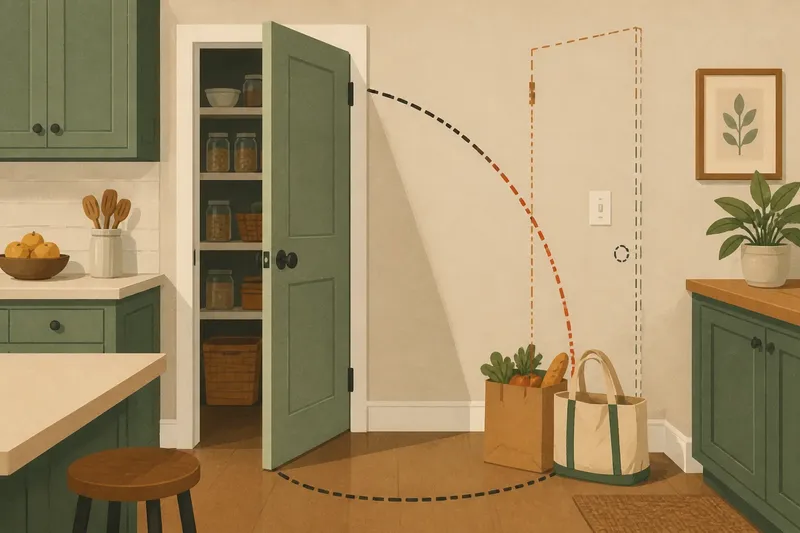
Sketch a simple floor plan or mark the furniture’s footprint with painter’s tape. Include door swings and the space people need to pass, rather than drawing only the objects. This gives you a practical test for whether a tempting piece belongs in the room at all.
Keep one short note of the room’s useful qualities: perhaps it needs a narrow table, a sturdy reading chair, and storage that conceals everyday clutter. Those needs help distinguish a good individual purchase from a piece that merely completes a catalog arrangement.
Which piece should anchor the room?
Choose the item that carries the room’s main job or visual presence. In a living room, that might be a sofa; in a dining room, the table may be the natural anchor. If a substantial inherited cabinet already dominates one wall, it may serve as the visual anchor even though it is not the room’s most-used piece.
An anchor gives you a reference, not a command to match everything to it. Consider its overall shape, color temperature, material, and visual weight. A sofa with rounded arms and a thick frame reads differently from a slim, straight-legged one, even if both are upholstered in the same fabric.
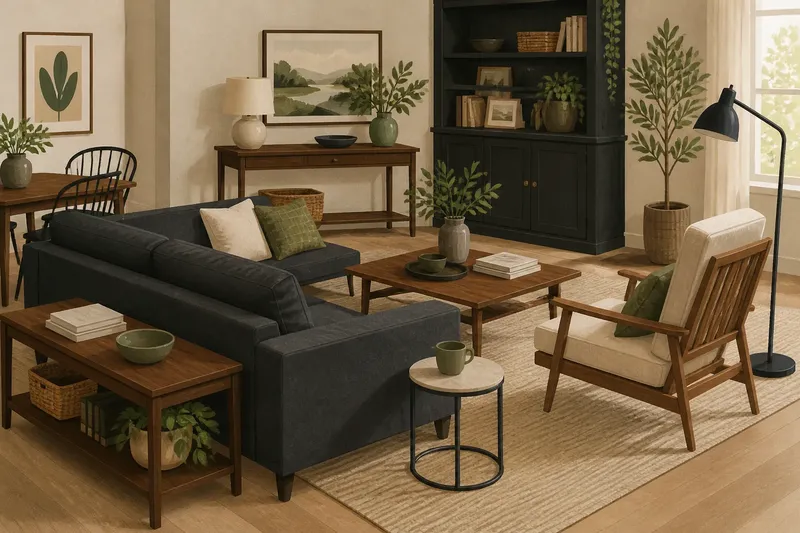
Say you have a low, charcoal sofa and want a chair for a sunny corner. You might choose a lighter-colored chair with visible wood legs, then connect it to the sofa with a small cushion that repeats the sofa’s charcoal. The chair remains distinct, while a modest echo links it to the seating area.
Before you buy, decide which feature of the anchor you intend to echo. One clear connection is often easier to work with than several forced ones.
How can separate pieces feel balanced?
Balance is about how visual weight is distributed, not about placing identical objects on either side of a room. Visual weight comes from a combination of size, darkness, solidity, pattern, and shape. A tall, dark cabinet may feel heavier than a low, pale bench, even if their footprints are similar.
Stand at the room entrance and notice where your gaze lands. If one side feels crowded, you do not necessarily need another large item on the other side. A floor lamp, a plant with an open silhouette, or a framed print can add presence without taking up the same kind of space.
Compare furniture height as well as width. A high-backed chair beside a low sofa can look intentionally varied if a floor lamp or wall art helps bridge the difference. A row of unrelated tall pieces, by contrast, may make the room feel top-heavy. Let some areas remain visually quiet.
Think about shapes, too. If a room already has a rectangular coffee table and a long, straight sofa, a rounded side table can soften the repeated geometry. The goal is a conversation among forms, not a room made of one shape.
What details should you repeat?
Choose a small visual thread and carry it through a few places. Useful threads include a wood tone, a metal finish, a curved edge, a particular color, or the texture of woven cane. Repetition helps separate furniture read as part of one room, but it does not need to appear on every object.
For example, a walnut dining table could sit comfortably with chairs in a different finish if walnut appears again in a picture frame or a slim console. A black metal lamp and a black metal chair base can make a quiet connection without requiring every handle, leg, and frame to match.
Color can work as a thread even when the materials differ. A muted green might appear in a chair, a ceramic bowl, and a small area of a rug. Keep the surrounding colors compatible in warmth and intensity; a subdued green may feel out of place beside several icy, high-contrast colors, even though all are technically different shades.
Aim for a few deliberate repetitions rather than a motif on every surface. Too much repetition can make the room feel as prescribed as a matching set.
How do you compare proportions before buying?
Use the pieces already in the room as scale references. A delicate side table may disappear beside a broad-armed sofa, while a thick, oversized table can crowd the same seat. Look at the relationship between the furniture’s height, mass, and the amount of open floor around it.
When a new piece will sit beside an existing one, compare the edges and use, not just the product photographs. A side table should be reachable from the seat; a dining chair should have room to pull back; a cabinet door should open without blocking a route. Those practical relationships can matter more than matching finishes.
If you are uncertain about a piece’s size, outline its footprint with tape and place a box or stack of books at a similar height to approximate its bulk. Walk around the area and sit in the nearby seat. This is a simple way to notice an awkward pinch point before bringing home something difficult to place.
Check the furniture’s care and assembly information, and follow the maker’s instructions and any applicable local requirements where they affect placement or use.
Which questions help you decide if a piece belongs?
Do all the wood finishes need to match?
No. Different woods can sit together when their tones and visual weight make sense in the room. Repeat one finish elsewhere, or connect contrasting finishes through a shared shape, color, or texture.
Can different furniture styles share one room?
Yes, if the pieces have a reason to relate, such as similar proportions, a repeated material, or a compatible palette. Let one or two items carry a more distinctive style while the rest give the room breathing room.
What if an existing piece feels out of place?
Try changing its surroundings before replacing it. A nearby lamp, artwork, cushion, or smaller table can repeat one of its colors or materials and help it connect to the rest of the room.
How many matching details are enough?
There is no fixed count, but a few visible echoes are easier to read than an identical finish on every surface. If each new object repeats the same detail, remove or vary one element and see whether the room feels less staged.
How should you bring the room together at the end?
Place the largest pieces first, then add chairs, tables, and storage according to their use. After each addition, check the route through the room and view the arrangement from the doorway and from the main seat. Move a piece if it blocks a natural path or makes one corner feel crowded.
Once the useful furniture is in place, add the smaller connections: a lamp that repeats a metal finish, a cushion that picks up a sofa color, or a frame that echoes a wood tone. Let at least one or two objects differ in a noticeable way. That contrast keeps the room from looking as though it arrived in one box.
Room furniture without a matching set feels intentional when the relationships are clear and the differences are allowed to remain. Before buying another piece, ask whether it solves a real need, fits the available space, and connects to the room through at least one detail. If it does, it does not have to match everything else to belong.